

Website footers are the sections at the very bottom of the page that contain links, contact information, service areas, and more. While they may not be the most exciting element of web design, they can be powerful tools for navigation, SEO, and conversions.
At Performance Driven Marketing, we know that many websites don’t use their footers to their fullest potential. That’s why we’re shining a spotlight on this often overlooked aspect of web design to help you maximize your SEO efforts and take your site to the next level. In this blog post, we’ll explore what a well-designed website footer can do for you and share some best practices.
What a Website Footer Really Does
A website footer acts as a secondary navigation area, builds trust in your company, and lets users know when they’ve scrolled to the bottom of the page. It also provides context for search engines about your site’s structure and relevance.
Footers can also be a good place for secondary tasks that are not necessarily directly related to your site’s main purpose. For example, you can include links to job applications, investor information, the company’s media kit or newsroom, or documentation for a product or service.
Footer Design Best Practices
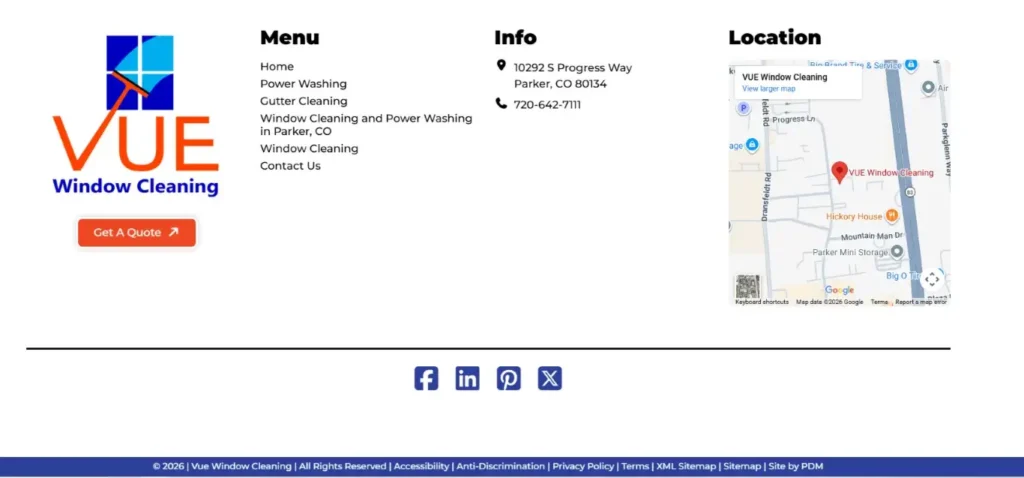
Like anything on your website, the footer should have a clean layout and clear visual hierarchy. You want to keep it informative without being overwhelming. Dividing content into columns can be an effective way to organize information and make it easier for users to find what they’re looking for.
Make sure you include these elements:
- Business name and consistent branding
- Navigation links (services, about page, contact page)
- Contact information (name, address, and phone number)
- Service area or location references
- Legal links (privacy policy, terms of service, accessibility statements)
- Social media links
- Trust signals (certifications, awards, affiliations, etc.)
On mobile, footers should be much simpler and take up less space so they can fit on a smaller screen. Include only the essentials — for example, instead of tons of navigation links, consider a “back to top” button that takes the user back to the main menu. Instead of including certifications and awards on the footer, move them to the about page or somewhere similar. Instead of an embedded map of your service area, link to a dedicated service area page.
SEO Benefits
The footer may not be the most exciting part of your website, but it can play a significant role in SEO. Internal linking in this section supports crawlability and reinforces the site’s hierarchy. There’s also schema opportunities tied to footer content, and when you provide consistent NAP (name, address, phone) information, it can affect local SEO. Just avoid keyword stuffing, like always, and be careful not to over-optimize your footer — functionality should come first!

User Experience and Conversion Benefits
Footers also help users who didn’t find links to what they needed above, reducing bounce rates by offering logical next steps once they’ve reached the end of the page. They support multiple types of user intent, whether it’s performing research, getting in contact with your team, or checking your company’s credibility. Plus, they can capture conversions like newsletter signups and contact forms.
Common Website Footer Mistakes
Every web designer and marketing agency has a different philosophy for footers and may include different information within them. But in general, they agree that treating this section as an afterthought is one of the biggest mistakes you can make. You should be thoughtful and intentional about what you include, ensuring everything has a purpose.
Avoid duplicating the main navigation excessively — every single page doesn’t need to be linked. Just stick with the most important ones. You should also avoid including outdated or inconsistent business information — not only is this frustrating for users, but it can affect local SEO, as well. Finally, make sure you don’t ignore accessibility and compliance requirements. It may not seem like a big deal, but including this information in your footer can save you from fines and penalties in the future.
Expert Web Design and Development by Performance Driven Marketing
At Performance Driven Marketing, we understand that every element of your website should work together to achieve your goals, including the footer. We optimize everything, from page content to layout to metadata, to boost your search engine rankings and increase your conversions. If your website could use a refresh, contact us today to schedule a free marketing review and learn more about how our team of experts can help.